What Contemporary Dystopia Teaches Us About the Craft of Survival
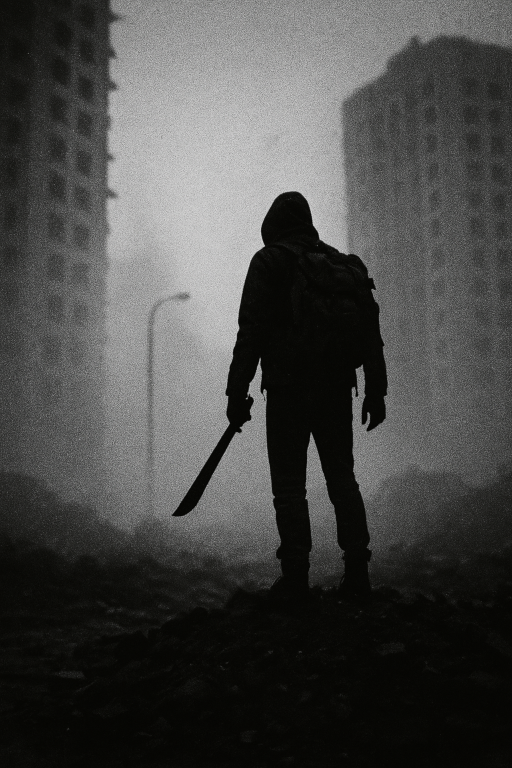
We don’t write dystopias because we want to destroy the world. We write them because we want to know what survives when the world is stripped away. For the modern writer, the genre has evolved beyond the rigid totalitarian nightmares of the mid-20th century. Today’s best dystopian fiction isn’t just about the boot stamping on a human face forever; it is about the quiet whimpering of a memory fading, the resilience of a small garden in a scorched plot, or the terrifying silence of a disconnected server.
If you are writing speculative fiction today, you are likely wrestling with the “now" just as much as the “after". The most relevant contemporary dystopian quotes aren’t just cool one-liners for a movie trailer; they are masterclasses in world-building, voice, and thematic resonance. Let’s dissect the most potent lines from the last two decades of ruin and see how they can sharpen your own prose.
1. The Art of the “Before” and “After”
“Survival is insufficient." — Station Eleven by Emily St. John Mandel
It is a line borrowed from Star Trek, repurposed by a traveling symphony in a post-flu apocalypse, and finally cemented as a mantra for a generation of readers. But for you, the writer, the brilliance lies not in the sentiment, but in the context.
Emily St. John Mandel didn’t just write a story about people walking around trying not to die. She understood that contrast is the engine of heartbreak. This quote works because the novel meticulously layers the “Before", our current world of iPhones, air conditioning, and meaningless corporate jobs, against the “After."
Craft Tip: When building your world, do not succumb to the temptation of constant misery. A relentless slog of gray ash and suffering eventually numbs the reader (a risk even masters like Cormac McCarthy flirt with). Instead, use the Station Eleven technique: anchor your horror in beauty. Mandel’s approach to structure often involves non-linear timelines that force the reader to grieve for the world they just lost. If your characters are merely surviving, your plot will stall. Give them art, religion, or an obsession that transcends their belly hunger. That is where the story lives.
Another line from the same text captures the writer's burden of observation: “The more you remember, the more you've lost." This is a direct challenge to your character's internal life. In your manuscript, how does memory function? Is it a comfort, or is it a weapon? Mandel treats memory as a tangible, heavy object that characters must choose to carry or drop.
2. Grounding Horror in the Mundane
“Better never means better for everyone... It always means worse, for some" — The Handmaid’s Tale by Margaret Atwood
While published in 1985, The Handmaid’s Tale has found its second, perhaps more terrifying life in the 21st century. Atwood’s genius, and the lesson every aspiring dystopian writer needs to study, is the domestication of terror.
This quote strikes a nerve because it refuses to be melodramatic. The Commander is not twirling a mustache; he is explaining a sociopolitical trade-off with the calmness of an actuary. This is how you write a villain. The most terrifying antagonists in dystopian fiction are not monsters; they are pragmatists.
Craft Tip: Avoid the “Dark Lord" trope. When you are drafting your regime, your corporation, or your collapsing society, ground its logic in something that sounds frighteningly reasonable. Atwood has famously stated that she included nothing in the book that hadn’t happened in history somewhere. Do the same. Research real-world rationalizations for atrocities. When your antagonist speaks, they should sound like they believe they are the hero of a different genre entirely.
Furthermore, look at how Atwood handles the transition of power. “Nothing changes instantaneously: in a gradually heating bathtub you'd be boiled to death before you knew it." This is a pacing instruction. If you are writing a “crumbling society" narrative, resist the urge to blow everything up on page one. Let the water warm up slowly. Show us the small, annoying inconveniences, the credit card that stops working, the checkpoint that appears on a commute, before you show us the gallows.
3. The Theology of Adaptability
“All that you touch You Change. All that you Change Changes you. The only lasting truth Is Change. God Is Change." — Parable of the Sower by Octavia E. Butler
If you are writing about the future, you are obligated to read Octavia Butler. Her work in the Parable series is not just fiction; it is a blueprint for survival. But for us writers, it is a lesson in agency.
Many amateur dystopian manuscripts suffer from “Passive Protagonist Syndrome", characters who just let the world happen to them. Butler’s protagonist, Lauren Olamina, does the opposite. She invents a religion (Earthseed) not because she is a mystic, but because she is a pragmatist who needs a tool to survive the chaos.
Craft Tip: This quote is a masterclass in thematic cohesion. Every scene in your book should test your theme. If your theme is “Change," then every plot point must force your character to adapt or die. Butler doesn’t just tell us God is Change; she forces Lauren to walk a highway of fire and madness to prove it. Butler often spoke about writing as an act of persistence, and her characters reflect that grit. Don’t save your characters. Corner them. Force them to construct their own philosophy when the old gods (capitalism, democracy, safety) fail them.
4. The Power of the Unsaid
“You have to accept that sometimes that's how things happen in this world. People's opinions, their feelings, they go one way, then the other. It just so happens you grew up at a certain point in this process" — Never Let Me Go by Kazuo Ishiguro
Ishiguro is the master of the “quiet dystopia". There are no explosions in Never Let Me Go. There is no revolution. There is only a terrifying, polite acceptance of a horrific fate. This quote encapsulates the crushing weight of systemic oppression, not through violence, but through bureaucracy and indifference.
Craft Tip: This is a lesson in voice. Kathy H., the narrator, speaks with a terrifying calmness. She doesn’t scream against the dying of the light; she rationalizes it. As a writer, you often feel the need to have your characters shout their emotions. Try the opposite. Try narrative suppression. Let the subtext scream while the dialogue whispers.
When you are world-building, consider the power of what is considered “normal" by your characters. In Ishiguro’s world, being harvested for organs is just... what happens. It’s a job. It’s a duty. The horror comes from the reader’s realization, not the character’s reaction. Trust your reader to be smart enough to be horrified without you telling them to be.
5. Stripping the Prose to the Bone
“He knew only that the child was his warrant. He said: If he is not the word of God, God never spoke" — The Road by Cormac McCarthy
We cannot talk about the end of the world without talking about the prose of the end of the world. McCarthy’s style, sparse, punctuation-light, biblical, mimics the landscape he describes. There are no luxuries in The Road, and so there are no luxuries in the sentence structure.
Craft Tip: Form must follow function. If your world has been stripped of excess, your writing should reflect that. You don't need to copy McCarthy’s lack of quotation marks (please, unless you are very, very good, keep your quotation marks), but you should look at how he removes “filter words". He doesn't say “He felt like the child was important". He says, “The child was his warrant".
Be declarative. Be absolute. Dystopian fiction is a high-stakes genre. Weak verbs and hedging adverbs (“seemingly", “somewhat", “slightly") dilute the danger. McCarthy’s prose style treats a sentence like a survival tool: it only contains what is absolutely necessary. Go through your latest draft and cut the fat. If a word isn't carrying food or fire, leave it on the side of the road.