Elections in the land of Christopher Columbus
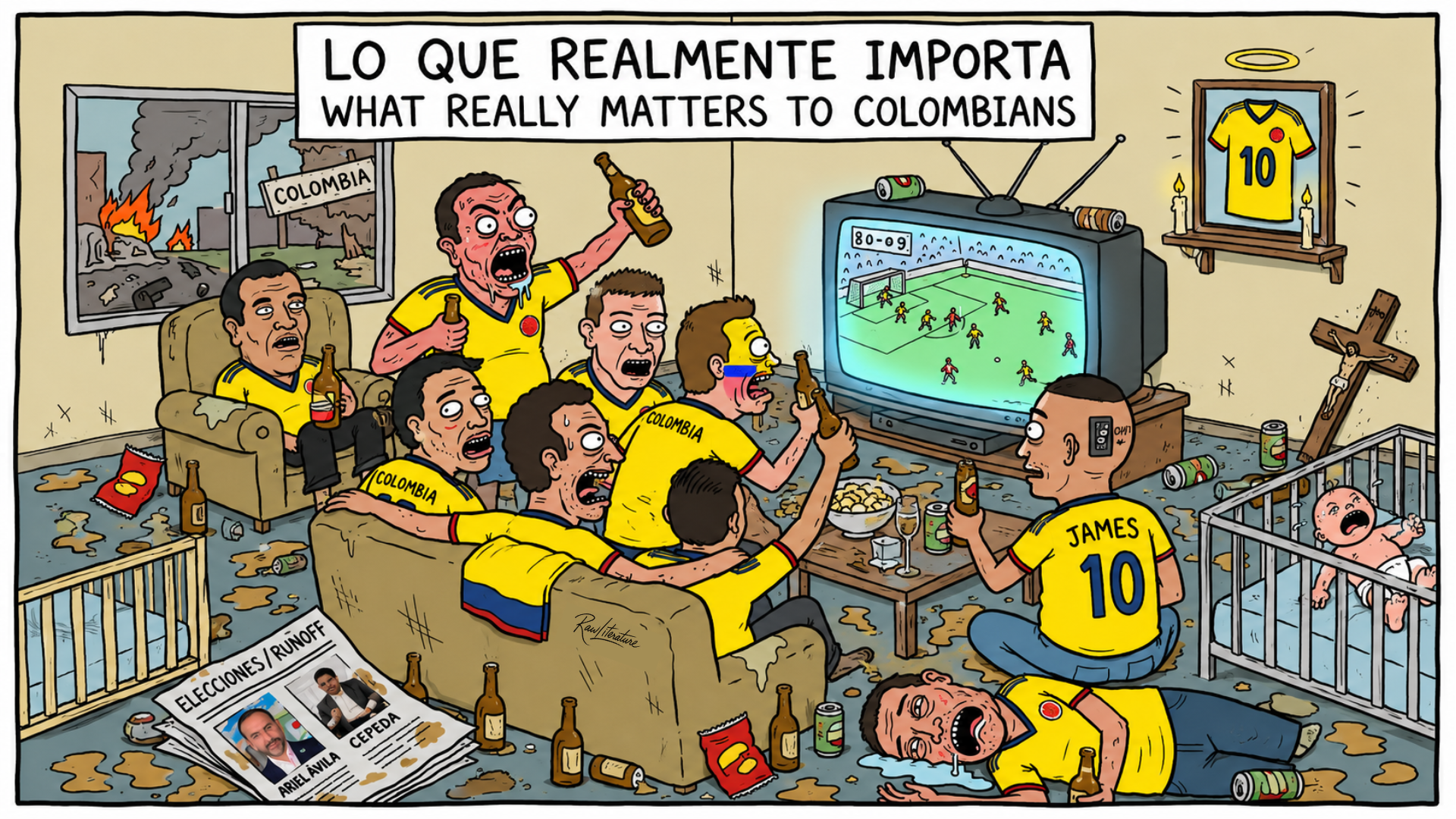
The land of Christopher Columbus is the sublime playground for bread and circuses. Every four years, its tragicomic presidential elections take center stage. Since 1991, the country’s modern constitution aligned the timing of these elections to coincide perfectly and completely accidentally with the FIFA World Cup, secretly hoping that the national football team might actually qualify. This is the one major event that every son and daughter of these lands awaits with breathless impatience. Consequently, election season serves up a toxic dose of hyper-passion, with candidates seamlessly blending desperate identity politics into the local populace's favorite circus.
Political campaigns are remarkably intense affairs where presidential candidates morph into clowns, children's entertainers, synchronized dancers, and devout worshippers of gods, virgins, and angels. They hyperbolize intellectualism, masquerade as military hardliners or peaceful visionaries, and passionately incarnate that messianic savior complex we see everywhere across the globe. They pledge radical change and status as an absolute superpower because Columbus's namesake paradise supposedly has it all: every imaginable climate, two pristine oceans, towering mountain ranges, sweeping plains, dense rainforests, and lush grasslands. It claims to be the most biodiverse country in the world; culturally speaking, it’s rich with a literature Nobel laureate, chart-topping global music, and an innate rhythm where any true offspring of Columbus can make an entire living room move their hips for the first time.
This year's 2026 elections are no different from previous spectacles spanning the last 200-plus years since the independence from Spanish colonization. As always, two irreconcilable visions of the nation dominate the leading opinion polls.
On one side stands the radical, populist far-right, spearheaded by the “wanna-be” European-American dandy, Abelardo De La Espriella. This high-profile lawyer famously amassed a fortune defending white-collar criminals, mafia kingpins, and the inner circle of foreign autocrats, most notably Venezuela's ultimate bagman, Alex Saab, who was pursued by the United States on sweeping money laundering charges involving state-backed food contracts and illicit oil deals. Beyond his legal gymnastics, De La Espriella loves blowing up cats with fireworks just to enjoy the suffering of living beings. Naturally, he praises Donald Trump, Nayib Bukele, and Javier Milei as the supreme role models to imitate.
On the opposite end crawls the progressive, populist far-left, represented by the soft-spoken philosopher, Iván Cepeda. He notoriously struggles to find the vocabulary required to brand Cuba and Venezuela absolute dictatorships, let alone admit the historical failures of communism as a system. Having dedicated his life to brokering peace talks with left-wing guerrillas, right-wing paramilitaries, and the state military, his achievements reside primarily in the comfortable realm of academic theory rather than any factual peace-building process. He remains a staunch ally of current President Gustavo Petro, an ideological snake charmer and increasingly despotic politician with whom constructive debate or democratic consensus has become completely impossible.
But remember, this is World Cup season. The first voting round successfully propelled these two polar opposites into a high-stakes runoff to finally decide who gets to ringmaster this colorful, blood-soaked circus. Crucially, as with any high-tension football match, authorities enforce the infamous “Ley Seca” (Dry Law), banning the sale and public consumption of alcohol. Naturally, the day before the prohibition takes effect, the entire population hoards enough liquor to survive a multi-year apocalypse. Fortunately, the national team's first and second group-stage matches fall conveniently right before and after the election day on June 21st. Nevertheless, the hangover from the first match and the frantic pre-gaming for the second are mathematically destined to completely blackout what remains of the actual democratic process.
The country desperately battles to safeguard a fragile line of progressive reforms, all while wrestling with its eternal curse of structural violence. Within these borders, endless skirmishes rage on between leftist guerrillas, dissident factions of the reborn FARC, right-wing paramilitary groups that notoriously enjoy playing football with human heads, powerful drug cartels, organized crime syndicates, the military, and the police. In short, the entire society remains locked in an eternal, self-destructive war, much like the generational doom Gabriel García Márquez beautifully exposed in his masterpiece, One Hundred Years of Solitude. Ultimately, what will it be for Colombia: a rocky continuity of exhausting progressive experiments or a swift return to the iron fist of a violent authority that functions more like a macabre event planner?
For more satirical news, visit Samsara News!